Butterfly Embroidery: A Designer’s Real-World Review
First Impressions: Light, Lyrical, and Surprisingly Versatile
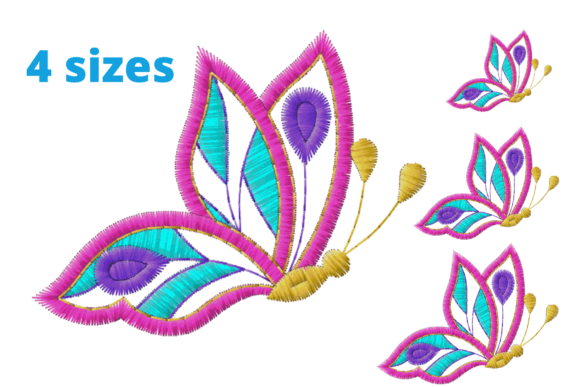
When I opened the Butterfly Embroidery file, what struck me wasn’t just the shape—it was the *rhythm*. The wings curve with gentle confidence, the body anchors without stiffness, and the overall silhouette breathes space. It doesn’t shout; it invites. As a designer who’s stitched hundreds of bugs—bees, ladybugs, dragonflies—I appreciate how this butterfly avoids cliché: no overdone glitter, no cartoonish exaggeration, no fussy antennae that snag in the hoop. It lands somewhere between botanical illustration and modern minimalism—ideal for makers who want charm without saccharine.
A Real Project Test: Custom Tote Bags for a Local Nursery Boutique
Last week, I used Butterfly Embroidery on a set of organic cotton tote bags for a small nursery boutique launching a spring collection. We placed it centered on the front panel, about 3.5" wide. On light fabric, it read beautifully—clean satin stitch edges on the wings, subtle fill stitch texture in the body, and just enough running stitch detail to suggest veining without overwhelming. Customers responded immediately: “It feels handmade but polished,” one said. “Not too babyish, not too grown-up—just right.” That balance is rare. This isn’t a design that disappears into the background or dominates the garment. It *complements*.
Where It Shines (and Where It Needs Thought)
Butterfly Embroidery works exceptionally well for:
- Custom apparel: Especially on relaxed-fit t-shirts, lightweight sweatshirts, and linen-blend aprons—fabrics where softness and drape matter more than structure.
- Baby embroidery: On onesies and bodysuits, its rounded lines soften the look, and the moderate size avoids bulk around delicate necklines.
- Embroidered patch applications: When stitched onto twill or denim, it holds shape without puckering—great for iron-on or sew-on patches sold as craft business add-ons.
- Holiday and gift embroidery: Paired with neutral thread (ecru on navy, soft grey on oatmeal), it reads quietly elegant—perfect for wedding guest favors, Mother’s Day tea towels, or Easter pillow covers.
But proceed thoughtfully with:
- Stretchy fabrics: Knits like jersey or ribbed cotton need extra stabilizer—this design has enough interior detail that slight shifting can blur wing definition.
- Textured surfaces: On heavy canvas tote bags or looped kitchen towels, test stitch density first. Too much fill stitch can flatten texture; too little loses clarity.
- Curved or tight spaces: Caps and beanies? Possible—but only if your hoop fits cleanly across the front panel. The wings extend outward, so avoid placements near seams or brims unless you’ve mocked up the angle.
- Dark or dense backgrounds: While it reads well on charcoal or deep teal, avoid black thread on black fabric—the fine wing outlines may vanish. Always check contrast in both color and grayscale mockups.
What It Adds to Your Finished Product—Beyond Pretty
This isn’t just decoration. Butterfly Embroidery subtly elevates perceived value. On an Etsy listing for personalized baby blankets, it signals care and intention—not mass production. For a small shop selling embroidered kitchen towels, it adds quiet personality without competing with functional text (“Dish Towel” or “Handmade in Maine”). And for craft fair shoppers, it’s instantly recognizable as *designed*, not downloaded from a free bundle. That builds trust: customers assume better materials, tighter stitching, and thoughtful branding.
I also noticed how it supports brand consistency. Whether used solo on a cap or grouped with a simple monogram on a tote, Butterfly Embroidery maintains visual harmony—no awkward scaling, no distorted proportions when resized moderately. That reliability matters when you’re building design assets for repeat use across product lines.
Practical Designer Notes Before You Stitch
Before committing to a client project or batch production:
- Test on scrap fabric first—especially if using non-standard stabilizer (cutaway vs. tear-away) or blending thread colors.
- Review stitch density: Look for tight clusters in the wing joints or body center. If they feel overly dense, consider reducing underlay or adjusting tension settings.
- Confirm hoop size compatibility: The description says it works “on any fabric that needs a nice accent”—but verify actual dimensions. Some butterfly designs stretch width-wise and won’t fit standard 4x4 hoops without repositioning.
- Inspect small details: Are antennae sharp? Do wing tips taper cleanly? Blurry ends suggest poor digitizing—this one held crispness at 3" and 4.5", which is promising.
- Try black-and-white mockups: Helps spot contrast issues and ensures readability across fabric tones.
- Use appropriate stabilizer: Lightweight cutaway for knits, medium tear-away for stable wovens. Skip basic fusible web—it won’t support the satin stitch integrity needed for clean wing edges.
- Check licensing: Since this is marketed for baby onesies, bodysuits, and t-shirts, confirm whether commercial use is permitted before selling finished embroidered items or bundling the digital embroidery file.
Final Thought: A Quietly Confident Design Choice
Butterfly Embroidery won’t solve every project—but it solves many with grace. It’s the kind of machine embroidery design that feels intentional, not incidental. Whether you’re an Etsy seller refreshing your spring collection, a craft business owner developing signature tote bag designs, or a custom apparel decorator adding delicate flair to a client’s sweatshirt line, this butterfly earns its place. It’s not flashy. It’s not trendy. It’s simply well-made—thoughtful in shape, reliable in execution, and quietly memorable in impact. That’s the mark of a design that lasts beyond the season.